Blog Image

Blog Image
Showing posts with label Andersen. Show all posts

Wednesday, December 9, 2015

Want that model home feel? Focus on the detail.

Posted by: Ken Mariotti

Earlier this year our blog titled “Want that model home feel? Aim high”, suggested that the very act of creating taller windows and doors in your home increases the wow factor found in model homes. The desire to create that model home feel in your own home is a sentiment many homeowners express. Another design secret is the importance of detail.

Once a home’s style is determined, what makes that style come alive is attention to detail. It’s important that you take the time to select the windows, doors and other objects in your home beginning with three design principles.

Marvin Windows
Think about what you don’t see

Oftentimes design is about thing that you don’t add, rather than the material that you do create. In other words, good design requires you to consciously do less. I’m reminded of a couple that selected arched windows and then they proceeded to cover the beautiful design under lavish window coverings. It’s hard to design minimally because we feel that convention dictates otherwise. Try to resist the urge to over decorate. Remember less is more. Open space creates focal points.

Andersen A-Series

Refine to the finer details

Fine-tune a space, the elements, alignment or scale of your windows and doors with the size, shape and existing features in the room. Get the detail right by focusing on proportions and lines of sight. For example, window grills can be used discretely as design elements, rather than simply repeating the identical pattern throughout.

Borrow from what you see

Andersen Visualizer
Get inspired by studying spaces similar to the space in your home that you intend to remodel or build. Today, many manufacturers offer visual tools that allow you to be your own designer. Andersen provides a visualizer to select your trim and sash colors. Andersen Renewal products offers a visualizer that allows you to upload a photo of your home, replace your existing windows with Renewal windows to see the effect. Likewise, Simpson Door's visualizer lets you choose your home style and select from a variety of door styles and colors to create the look you want. It’s as though you have your own personal designer.

When you walk into a model home, you can be certain that professionals created that beautiful space. Becoming a professional at your craft means you’ve created a lot of bad work and made a lot of mistakes on your journey to becoming an expert. Build your skills by decorating less, creating focal points and experimenting.


If you want that model home feel focus on the details like a professional does. Visit our showroom to touch the products, see the colors in different lights and get advice from professionals who can help you avoid common mistakes.

Tuesday, October 6, 2015

Are Your New Windows Sustainable?

Posted by: Ken Mariotti

Windmills in the back yard, rain barrels under gutters, and concrete front lawns, it’s looking like more homeowners are joining the sustainability movement. Sometimes these obvious efforts to do the right thing can seem extreme. When it comes to home building or remodeling, sustainability starts by critically thinking about how windows affect a home’s overall climate.

Windows typically comprise 10-25% of a home’s exterior wall area, and in a climate like ours, they can account for 35-50% of the heating and cooling needs of the home.

When you’re ready to remodel or build a new home talk to architects and builders who understand sustainable design and enlist them to help you create a three step balanced approach to sustainability.

            Step One: Start with Design Principles

            Step Two: Select High Performance Windows

            Step Three: Build with Integrity

Design Principles
Marvin Windows
A good architect or designer will focus on your thermal comfort, in our case, living in an extreme climate. A good design reduces the need for heating and air conditioning and uses construction materials, especially windows that help balance the thermal load. In other words, flooring, ceilings, window sizes and framing materials, shading and other choices interact in ways that lower thermal loads. The goal is for your home to require less heating and cooling to maintain comfortable conditions.

Designers who understand these principles will choose designs and products that are best suited for your home. They will orient windows so as to optimize light and the warmth, while neutralizing the suns overall affect on your home’s temperature. For example, sparingly place windows on the east and west facades, and maximize the window placement on the south side of your home. The design will provide natural ventilation by strategically placing windows on both sides of the house to create cross-ventilation or layouts, like ceiling level hoppers that capture cooling breezes in the summer.

High Performance Windows
Marvin Windows for Ventilation
Advances in window technology, such as double pane and low-e coatings, substantially reduce heat loss and control heat gain. The performance contrast between new windows and the original single glass panes that you may have in your old home is drastic. Imagine that all these years, all you had separating you from the Chicago winter was a single pane of quarter-inch glass. Whether you choose wood, fiberglass, vinyl or aluminum, modern window frame conductivity outperforms anything you’ve known before.

Consult the standardized ratings for Solar heat gain coefficients (SHGC) and U-values provided by the NationalFenestration Rating Council (NFRC) and Energy Star Labels, but remember that while ratings are important, they shouldn’t be the driving factor for the window choices. Features like thermal performance can add to condensation problems for instance, so that interior humidity and climate also need to be considered. Don’t rely on one value over all others; rather take the entire balanced design into consideration when choosing new windows.

Build Smart
Marvin Upper Transoms
The success of your design and product choices relies on building and installation techniques. High performance windows need to be installed according to the manufacturer’s instructions so as not to diminish the energy performance, not to mention, damage the window unit or surrounding walls. Homeowners should expect the builder to follow key guidelines to the highest standards.

  • Meet all codes
  • Properly size rough opening allowing for expansion and movement
  • Install window unit level, plumb, and square
  • Maintain the continuity of the weather-resistant barrier
  • Insulate all voids between the window and wall with expanding foam (minimum rate)
  • Maintain the integrity of air and vapor retarders
  • Only apply caulks and sealants that are compatible with the substrate

The best measure of sustainability is building something right the first time.

Thursday, October 1, 2015

Don’t Get Stuck Inside This Winter – What you need to know about hard to open windows.

Posted by: Ken Mariotti

If you find yourself crouched low to gravity, feet hip width apart, abs firm, elbows tucked, arms ready to lift and you’re not a sumo wrestler, you may have a problem of stuck windows.


Don’t get stuck inside this winter. If you’re wrestling with old or new windows you can do something about it before winter arrives. First, understand that humidity causes wood windows to swell, accumulated dust causes tracks to increase friction, and loose or faulty tension springs fail. It’s also possible that the installation wasn’t done correctly. If the window wasn’t installed perfectly square, if too much insulating foam was compressed in the wall cavity, or if setscrews weren’t properly adjusted - your window can be hard to open.

The simple anatomy a window

Windows operate on simple mechanical principles. Understand these and you can diagnose your window problem.

Single and double hung windows simply move up and down in channels in the window frame. Balancing mechanisms, such as rope and pulley, spiral or block and tackle, assist in raising and lowering the window sashes, and prevent them from sliding downward.

Andersen Casement Crank
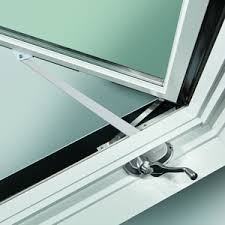
Casement and awning windows operate by a crank handle and a track. The windows are opened and closed by means of a crank mechanism, which resides against the frame on the inside. The crank houses a series of gears inside a metal housing, which moves a control arm, attached to the sash, which slides along a track.

Sliding windows rely on rollers and a sliding track, like a sliding door. To open and close simply requires just a push.

Eliminate obvious maintenance problems

Often, the reason windows are hard to open and shut is because they’ve not been properly maintained. Windows are finely engineered, rely on moving parts, withstand extreme weather, and are built to last a long time. A well-maintained window will operate smoothly, year after year.
Pella Sash Removal

Single and double hung windows become difficult to open if there’s a buildup of dirt, dust, and debris. Over the years, friction from the buildup increases making the windows difficult to open and close. Try cleaning the window frames and spray with a non-silicone, solvent-free lubricant, opening and closing the window several times to work the lubricant.

If you have old painted windows check the sides of the sash to be sure they have not been painted (never apply primer or paint to the edges of the sash). If excess paint has been applies around the window frame and sill, gently slide a putty knife between the sash and the frame to release the paint. You might try using a hair dryer to blow hot air around the edge of the sash until you can move the window. After successfully releasing the window, lubricate the window frame interiors, channel guides, with pure paraffin candle wax, such as an unscented white votive candle.

Casements and awnings that are difficult to open and shut will require removing the sash (consult the instruction manual for your windows) and checking for stripped or loose screws. Lubricate the hinges with a non-silicone, solvent-free lubricant, and then open and shut the windows several times to work in the lubricant. It is helpful to keep the gears lubricated to make turning easy by applying a few drops of oil around the base of the handle if it’s difficult to turn.

Easy to clean sliders
Sliders that are difficult to open and close may simply require cleaning the roller system and track with a simple soap and water solution. If this doesn’t solve the problem, try lubricating the rolling system.

If the problem persists

After eliminating the obvious causes of hard to operate windows if you windows still don’t open with little effort, you’ll need to eliminate the most common repair problems. Failed or worn out pulleys or tension springs are common repairs for single and double hung windows.  Chipped, broken or bent gears require you to buy a whole new casement crank unit for your casement window. Broken wheels may need replacing on sliding windows.
Double Hung Balancer: ProSalesMag

Windows are basically simple mechanisms requiring only regular maintenance to work well.  Mechanisms can be faulty or wear out, which requires replacing parts, re-installing the frame or other repair.  These repairs may appear easy enough, but they can actually be tedious challenges better left to professionals who have mastered the art and science of window repair.

Woodland’s window manufacturer’s websites offer tips on window maintenance; check out Marvin, Andersen, and Pella.


Don’t get stuck inside this winter.

Thursday, January 29, 2015

Want that Model Home Feel? Aim High.

Posted by: Ken Mariotti

New 8ft French Doors
Why do we feel happy when we walk into a model home? The best ones are the new high-end developments where the builders incorporate the latest features and materials. What you’re likely feeling is the sense of light, openness and a connection with the outdoors. How do they create that space? Today, homebuilders are using windows and doors in new ways that maximize the homeowner experience, leaving you wanting to move in. What if you could create this same feeling in your own home?

When you get back home, take a close look at your home’s windows and doors? Do they look undersized, do you have walls completely baron of windows, is your sliding patio door original, so that a Hollywood film producer could select your house for a remake of a 1950’s family TV series?

The feeling you had in the model home was likely because the windows and doors were chosen to obtain unobstructed views and lots of light. Manufacturers are making multi-panel glass and taller doors that flood rooms with light.
Old 6' 8" French Doors

If you want to achieve this look and feel in your home, begin by researching the two standard styles of patio doors, the patio slider or the French swing door(s). Within these two general categories you’ll find a plethora of options such as, French style sliding patio doors with two, three or four-panel configurations, folding doors and pocket sliders. Generally speaking, most people select a slider in the bedrooms, kitchen or family rooms and French doors are preferred for the more formal areas such as the dining or living rooms. From the start, check your answers to a few key questions.

√  What is the largest size that my current opening or wall can accommodate?
√  What direction does the foot traffic flow through the room to the outside?
√  Is there space to open French doors into the room? Could one door open and the second door remain stationary?


At this point you can check out the window showroom, because you have enough information to explore the best possibilities for your home. A few additional pieces of information will be needed before you proceed too far down the path. You’ll want to make sure your header is built according to code and has the proper load requirements for the wall. You’ll also need to measure the rough window openings from stud to stud. All of these are important perimeters that will allow you to choose from standard sizes rather than spending unnecessarily on custom sizes. Remember, when getting a window, write down the dimensions and always put the width first and the height second – always.

Once you’re in the showroom, remember to aim high and settle on the tallest doors your room can accommodate functionally and aesthetically – 8ft, 9ft, or 10ft.? This one feature will do more to give you the open and expansive feeling of a newly built home. Marvin, and Andersen offer these 8ft heights as standard sizes while Pella can accommodate 8ft heights. 

Marvin’s Remodeling & Replacement solutions guide is a great place to orient you to the options. Remember, if you want that model home feel – you’ve got to aim high.